
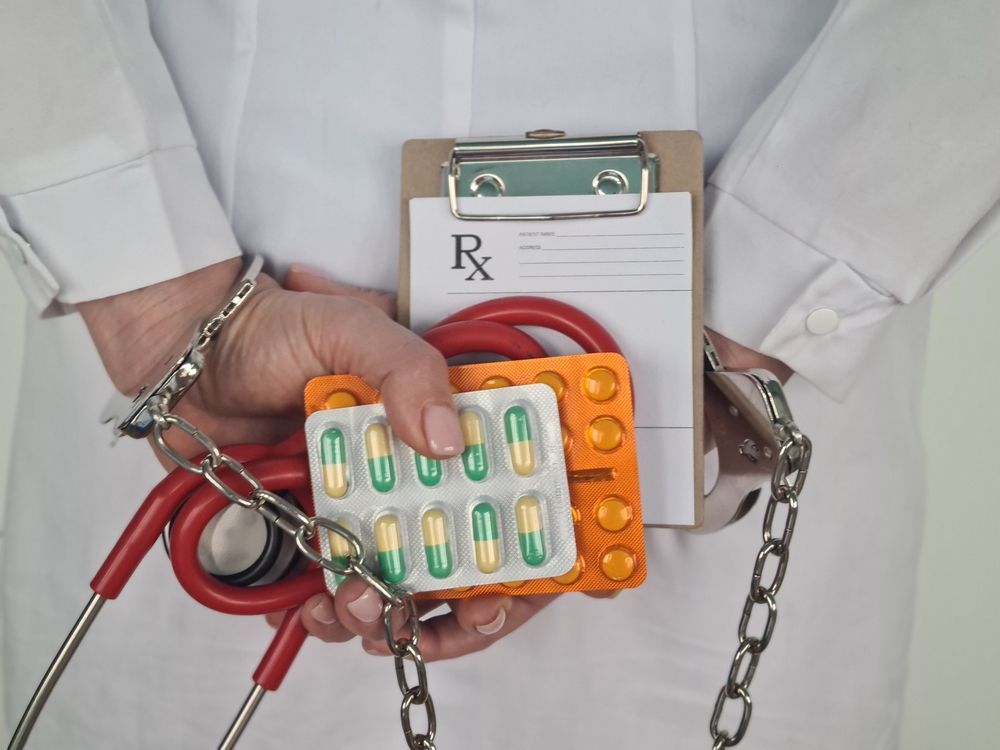
Prescription Drug Crimes: When Legal Medication Becomes Criminal
There’s a cruel irony in the fact that the same white pill bottle sitting innocently in your medicine cabinet could be the key evidence in a felony prosecution that destroys your life. Every single day, millions of Americans take legally prescribed medications without ever realizing they’re walking a tightrope over a legal abyss where one misstep (sharing a pill, keeping leftover medication, or even carrying your own prescription in the wrong container) can transform you from a law-abiding citizen into a criminal defendant facing years in prison.
When did the very substances our doctors tell us we need to heal become the most dangerous things we could possibly possess, and more importantly, how do you protect yourself when the line between legal medicine and criminal activity has become virtually invisible to everyone except prosecutors?
The landscape of prescription drug crimes has evolved dramatically over the past two decades, transforming from a relatively minor legal issue to one of the fastest-growing areas of criminal prosecution. What makes these cases particularly devastating is that they often involve people who never intended to break any laws. For example, individuals who found themselves caught in an increasingly complex web of regulations that govern how prescription medications can be possessed, shared, and used can be at fault.
The opioid crisis has fundamentally changed how law enforcement and prosecutors approach prescription drug cases. What once might have resulted in a warning or minor citation now frequently leads to serious felony charges with mandatory minimum sentences. Understanding how legal medications can become the basis for criminal charges isn’t just important for people who use prescription drugs, it’s essential knowledge for anyone who might find themselves or their loved ones navigating this treacherous legal terrain.
The Growing Trend of Prescription Drug Prosecutions
Law enforcement agencies have dramatically increased their focus on prescription drug crimes as part of broader efforts to combat the opioid epidemic. This shift has resulted in a surge of prosecutions that often catch people off guard, particularly those who don’t realize they’re violating the law.
The statistics tell a stark story: prescription drug arrests have increased by over 300% in the past decade, with nearly 70% of defendants having no prior criminal history. Average sentences have doubled since 2010, and federal prosecution of prescription drug cases has increased by 250%.
This enforcement surge has created a situation where activities that many people consider harmless or even helpful can result in serious criminal charges. The Law Offices of Richard J. Fuschino Jr. has seen firsthand how these cases can devastate families and destroy lives, often involving defendants who had no idea they were committing crimes.
Common Ways Legal Medications Become Criminal
Understanding how prescription medications can lead to criminal charges requires examining the various ways that legal possession can cross into illegal territory. These situations are often more common and easier to stumble into than most people realize.
Sharing Medications with Family or Friends
One of the most common ways people find themselves facing prescription drug charges is through sharing medications with others. This might involve giving leftover pain medication to a spouse or family member, sharing anxiety medication with a friend experiencing panic attacks, providing prescription medications to elderly parents or relatives, or offering prescription drugs to someone who can’t afford their own medication.
While these actions often stem from genuine desire to help others, they constitute illegal distribution of controlled substances under both state and federal law. The penalties for these seemingly minor acts can be severe, particularly when they involve Schedule II controlled substances like opioid pain medications.
Possession Without a Valid Prescription
Another frequent source of criminal charges involves possessing prescription medications without a current, valid prescription. This can occur in several ways:
- Keeping leftover medications beyond the prescription period: Many people don’t realize that prescription medications legally “expire” once the prescribed course of treatment ends. Possessing these medications afterward can result in criminal charges.
- Carrying someone else’s medications: Even temporarily holding someone else’s prescription medication can constitute illegal possession. This includes situations like helping an elderly parent manage their medications or picking up prescriptions for family members.
- Having prescriptions from multiple doctors: While there can be legitimate medical reasons for seeing multiple physicians, possessing similar medications from different doctors can raise red flags and lead to “doctor shopping” charges.
Doctor Shopping and Prescription Fraud
Modern prescription monitoring systems make it easier for prosecutors to identify patterns they consider suspicious, even when patients have legitimate medical needs. Law enforcement agencies have become increasingly sophisticated in tracking prescription patterns and identifying potential fraud. Doctor shopping charges can arise from visiting multiple doctors for the same condition without disclosure, seeking prescriptions shortly after losing or running out of medications, getting prescriptions filled at different pharmacies, or failing to disclose previous prescriptions when seeing new doctors.
The Medical vs. Criminal Distinction
One of the most challenging aspects of prescription drug cases is distinguishing between legitimate medical use and criminal activity. This distinction often becomes the central issue in defending these cases, requiring careful analysis of medical records, prescription patterns, and the defendant’s intent.
Medical professionals and legal experts don’t always agree on what constitutes appropriate prescription use. What a doctor might consider reasonable pain management, a prosecutor might characterize as drug-seeking behavior. This disconnect creates difficult legal situations where medical decisions become evidence of criminal intent.
Factors that prosecutors often use to argue criminal intent include frequency of doctor visits, quantity of medications prescribed, types of medications requested, payment methods used for prescriptions, and travel distances to different doctors or pharmacies.
Defense of these cases often requires expert medical testimony to explain the legitimate medical reasons behind prescription patterns that prosecutors find suspicious.
Federal vs. State Prescription Drug Charges
Prescription drug crimes can be prosecuted at both the state and federal levels, with significant differences in penalties and procedures. Understanding these distinctions is crucial for developing effective defense strategies.
| Aspect | State Prosecution | Federal Prosecution |
| Typical Charges | Simple possession, small-scale distribution | Trafficking, large-scale distribution, across state lines |
| Penalties | 1-5 years for felonies, fines up to $10,000 | 5-20 years minimum, fines up to $1 million |
| Court System | State courts, local prosecutors | Federal courts, U.S. attorneys |
| Plea Options | Drug court, diversion programs available | Limited alternatives, mandatory minimums |
| Sentencing | More flexibility, consideration of circumstances | Strict guidelines, less judicial discretion |
| Resources | Local law enforcement, limited resources | FBI, DEA, extensive federal resources |
Federal prosecutors typically become involved when cases involve large quantities of medications, distribution across state lines, or connections to organized prescription fraud schemes. However, even relatively minor cases can become federal matters if they involve certain medications or cross jurisdictional boundaries.
Types of Prescription Drug Crimes
Prescription drug crimes encompass a wide range of activities, each carrying different penalties and requiring different defense approaches. Understanding these categories helps defendants and their families comprehend the seriousness of the charges they face.
Simple Possession Charges
Simple possession involves having prescription medications without a valid prescription. While this might sound like the least serious charge, it can still result in felony convictions and significant penalties, particularly for controlled substances.
Elements prosecutors must prove for simple possession include knowledge of the medication’s presence, intent to possess the medication, lack of valid prescription, and identity of the substance as a controlled substance.
Distribution and Trafficking Charges
Distribution charges don’t require evidence of sales or profit motive. Simply giving prescription medications to another person constitutes distribution under the law. Trafficking charges typically involve larger quantities and carry much more severe penalties.
The distinction between distribution and trafficking often depends on quantity of medications involved, evidence of intent to distribute versus personal use, previous criminal history, and presence of paraphernalia suggesting distribution.
Prescription Fraud and Forgery
These charges involve attempts to obtain prescription medications through deceptive means, including altering prescription numbers or quantities, forging doctor signatures or creating fake prescriptions, using false information to obtain prescriptions, and impersonating medical professionals.
Prescription fraud charges often carry enhanced penalties and can result in both state and federal prosecution.
Unique Defense Strategies for Prescription Drug Cases
Defending prescription drug cases requires specialized knowledge of both criminal law and medical practices. The Law Offices of Richard J. Fuschino Jr. employs several unique defense strategies that Philadelphia drug lawyers can take advantage of when addressing the specific nature of these cases.
Medical Necessity and Legitimate Use Defense
One of the most effective defense strategies involves demonstrating that the defendant’s actions were motivated by legitimate medical needs rather than criminal intent. This defense requires:
- Comprehensive medical record analysis: Reviewing all medical records to establish a pattern of legitimate medical treatment and prescription use.
- Expert medical testimony: Bringing in medical professionals who can explain the reasonableness of prescription patterns and the medical necessity for certain medications.
- Pain management documentation: For cases involving pain medications, establishing the existence of chronic pain conditions that require ongoing treatment.
Challenging Prescription Monitoring System Evidence
Prescription monitoring systems, while useful tools for identifying potential abuse, are not infallible. Defense strategies can include:
- Questioning the accuracy of monitoring system data
- Challenging the interpretation of prescription patterns
- Demonstrating legitimate reasons for seemingly suspicious behavior
- Identifying gaps or errors in monitoring system records
Constitutional Challenges
Many prescription drug investigations involve surveillance, search warrants, and other law enforcement activities that may violate constitutional rights. Common constitutional challenges include:
- Fourth Amendment violations: Challenging illegal searches of homes, vehicles, or medical records without proper warrants.
- Privacy rights: Arguing that certain medical information should be protected from prosecution use.
- Due process violations: Identifying procedural errors in the investigation or prosecution process.
Addiction as a Mitigating Factor
When defendants struggle with prescription drug addiction, this can be used as a mitigating factor in sentencing and plea negotiations. This approach involves:
- Comprehensive addiction evaluation
- Treatment history documentation
- Expert testimony about addiction as a medical condition
- Proposals for treatment-based alternatives to incarceration
The Role of Prescription Monitoring Programs
Prescription Drug Monitoring Programs (PDMPs) have become central to both preventing prescription drug abuse and prosecuting related crimes. Understanding how these systems work is crucial for anyone facing prescription drug charges.
PDMPs track all prescriptions for controlled substances within a state, creating a comprehensive database that law enforcement can access to identify suspicious prescription patterns. While these systems serve important public health functions, they also create new opportunities for prosecution.
Common ways PDMPs contribute to criminal cases include identifying patterns of doctor shopping, revealing overlapping prescriptions from multiple providers, tracking pharmacy shopping behavior, and monitoring prescription quantities and frequencies.
Defense attorneys must understand how to challenge PDMP evidence and explain legitimate medical reasons for patterns that might appear suspicious to prosecutors.
Penalties and Consequences Beyond Prison
The consequences of prescription drug convictions extend far beyond potential jail time, affecting virtually every aspect of a defendant’s life. Understanding these collateral consequences is essential for making informed decisions about plea agreements and defense strategies.
Professional Licensing Issues
Many professions require disclosure of criminal convictions, and prescription drug crimes can be particularly damaging to professional licenses:
- Healthcare professionals: Doctors, nurses, pharmacists, and other healthcare workers face automatic license suspension or revocation for prescription drug convictions.
- Professional licenses: Lawyers, accountants, real estate agents, and other licensed professionals may lose their ability to practice.
- Security clearances: Government employees and contractors often lose security clearances, ending their careers in sensitive positions.
Employment Consequences
Prescription drug convictions create significant barriers to employment:
- Background check failures for most professional positions
- Automatic disqualification from healthcare, education, and finance jobs
- Loss of current employment upon conviction
- Difficulty obtaining professional references
Housing and Financial Impact
Conviction consequences can include difficulty qualifying for rental housing due to background checks, loss of eligibility for certain government benefits, challenges obtaining loans or mortgages, and impact on insurance coverage and costs.
When to Seek Legal Representation
The complexity of prescription drug cases and the severity of potential consequences make early legal representation crucial. Many people make critical mistakes in the early stages of these cases that can be difficult or impossible to correct later.
Warning signs that you need immediate legal representation include contact from law enforcement about your prescription use, pharmacy notifications about prescription monitoring flags, doctor visits questioned by investigators, searches of your home or vehicle revealing prescription medications, and arrest or charges related to prescription medications.
A criminal defense attorney in Bucks County, PA, and the surrounding areas will understand that prescription drug cases often involve people who never intended to commit crimes. Our approach focuses on protecting clients’ rights while working to minimize the impact of these charges on their lives and futures.
Building Strong Defense Cases
Effective defense of prescription drug cases requires a comprehensive approach that addresses both the legal and medical aspects of the charges. This process begins with thorough investigation and continues through trial or plea negotiations.
Key components of strong prescription drug defenses include:
- Medical expert consultation: Working with medical professionals who understand both the legitimate use of prescription medications and the medical basis for certain prescription patterns.
- Detailed record analysis: Examining all medical records, prescription records, and law enforcement reports to identify weaknesses in the prosecution’s case.
- Constitutional review: Analyzing all aspects of the investigation to identify potential violations of constitutional rights.
- Mitigation evidence: Developing evidence about the defendant’s background, medical needs, and circumstances that led to the charges.
The Importance of Early Intervention
Early intervention in prescription drug cases can often prevent minor issues from becoming major criminal cases. This might involve working with prosecutors before charges are filed or negotiating agreements that avoid the most serious consequences.
Benefits of early legal representation include opportunity to prevent charges from being filed, better plea negotiation positions, time to develop comprehensive defense strategies, protection of constitutional rights from the beginning, and opportunity to address underlying medical issues.
Looking Forward: Protecting Your Future
Prescription drug cases don’t have to define your future, but they require careful handling by experienced legal professionals who understand both the criminal law and medical issues involved. The key to successful defense lies in early intervention, comprehensive preparation, and strategic approach that addresses all aspects of these complex cases.
The Law Offices of Richard J. Fuschino Jr. has extensive experience defending prescription drug cases, from simple possession charges to complex federal trafficking cases. Our approach combines aggressive legal advocacy with understanding of the medical issues that often underlie these cases.
If you’re facing prescription drug charges or believe you might be under investigation, don’t wait to seek legal representation. Be sure to contact the professionals at The Law Offices of Richard J. Fuschino Jr. today. After all, the decisions you make in the early stages of these cases can have profound impacts on their ultimate outcome. With proper legal representation, even serious prescription drug charges can often be resolved in ways that protect your future and allow you to move forward with your life.
Remember that prescription drug crimes often involve people who never intended to break the law. With the right legal strategy and experienced representation, these cases can be defended successfully, allowing defendants to rebuild their lives and avoid the most serious consequences of these charges.